

I think at this point, on this website, Felicia Day needs no introduction. From The Guild, to Dragon Age 2 and Fallout: New Vegas, to Buffy and Supernatural, and more recently her work on Stray Gods, Critical Role, and more, she’s been a constant positive presence in almost every corner of nerd culture. But in 2020 she found something she HADN’T done: write a graphic novel.
So she did.
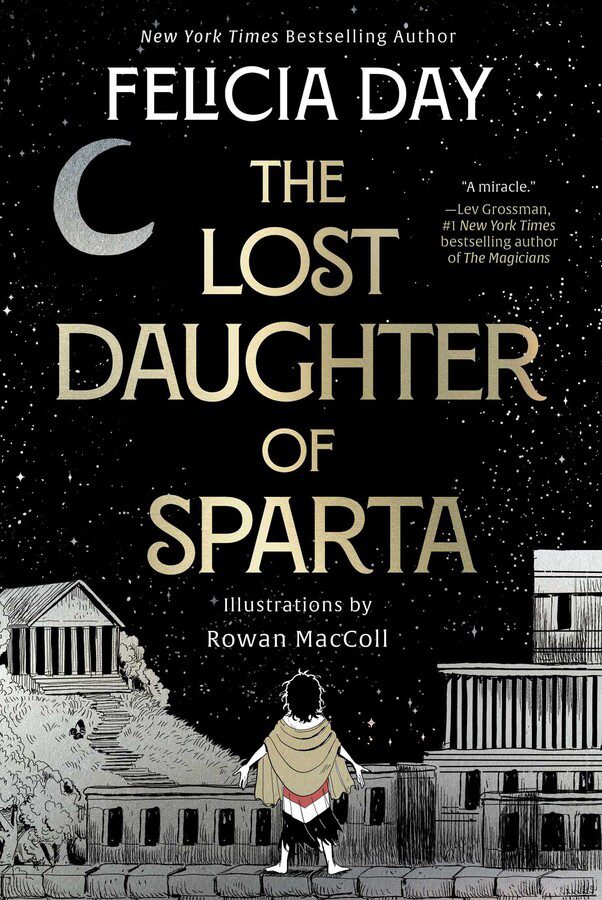
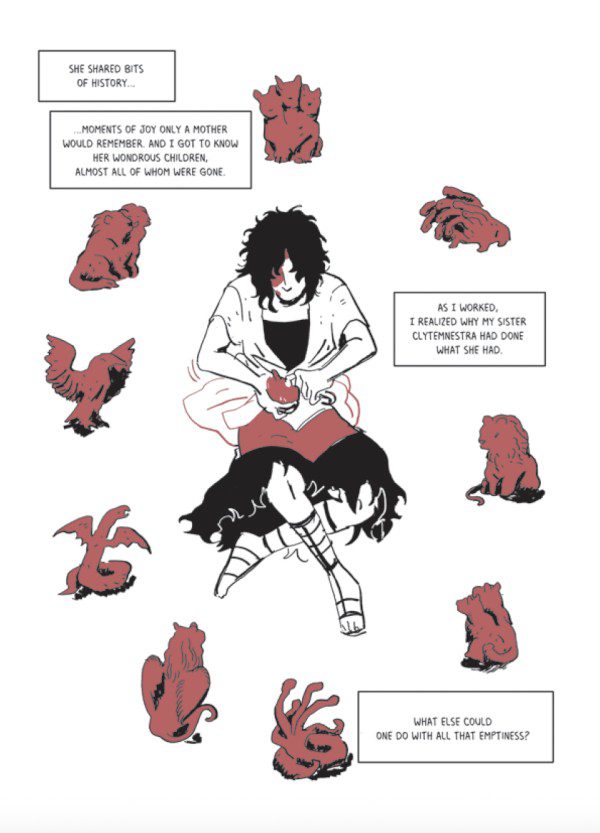
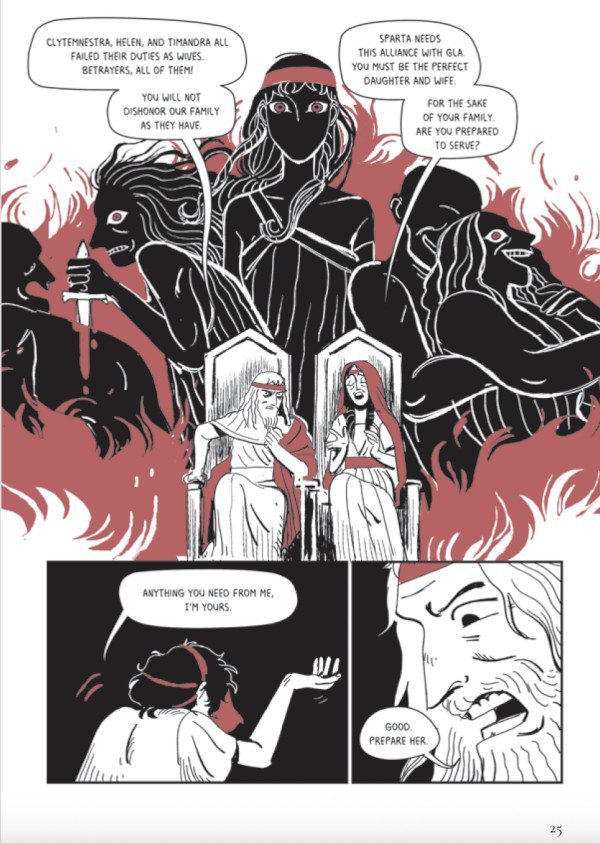
That graphic novel became The Lost Daughter of Sparta, a new tale of Greek mythology centered around the obscure character of Philonoe, daughter of Leda (of the swan) and sister to Castor & Pollux (of the stars) and Helen (of Troy). As a lifelong fan of Greek mythology and a fan of Felicia going way back, I of course couldn’t get her in for a chat FAST enough ahead of the book’s release later this month.
Dan Arndt: You’ve written two books (Embrace Your Weird:
Face Your Fears and Unleash Creativity and You’re Never Weird on the Internet (Almost) but this is a full graphic novel. How did this feel different compared to working on those?
Felicia Day: This is my first graphic novel, although I did do comics for Dark Horse for The Guild. But doing a longer format, intentionally a graphic length novel was certainly different, but also kind of natural in that I love reading graphic novels. The format is really beautiful and it’s something that’s familiar to me. I certainly read more graphic novels myself than I do single issue comics. My daughter is obsessed with graphic novels and she won’t read anything but them.
The subject matter that I’m talking about is also a little different, so having it be in graphic novel format felt like it would be closer to the fans of my work and also just the world of geek and nerd culture. It’s part of our DNA, almost the originator of the DNA of modern nerd culture. So I’m excited to be in this format and have challenged myself and also been able to tell the story that’s really personal to me, even though it’s written, you know, thousands of years ago.
DA: I love mythology but I looked up the character and…she’s pretty obscure.
FD: Yeah, she’s a character that I plucked out of an ancient piece of writing. I could not find anything more than just one line on about this character. Yet she’s connected to Helen of Troy, who is one of the most famous female characters in Greek mythology. So it really fascinated me.
I started writing it in 2020. COVID had just hit and I was feeling the need to write something outside the normal confines of what I usually did, but also something that Hollywood would not really have a use for. I was feeling the freedom of not having to write to please other people and I really wanted to do something to please myself. This was just a story I couldn’t stop thinking about.
DA: Greek mythology has always had a lot of gender politics around it. But specifically was the nature of Sparta being such a aggressively masculine place. It’s something that people bring up even today. Was that part of the interest of the story for you as part of all your working on it?
FD: This story is actually set in ancient Mycenae, which is a predecessor to Sparta and is when Homer’s Odyssey was actually set. We don’t know a lot about that society and when you read The Odyssey, you’re reading an oral tradition that was telling stories about ancient history to them. It was their “good old days.” So it’s really interesting when you really do a deep dive about what what actually happened back then versus what we think about it.
We do think about Sparta as being this hyper masculine society, but actually it was the most female friendly, in a sense, society in Ancient Greece. Women could get divorced, could own property. It was actually the place that women probably enjoyed the most freedom in a very patriarchal society So I just wanna say that, like it’s really interesting and I encourage anybody who’s even remotely curious to deep dive because the history is really fascinating.
DA: But there’s more going on with Philonoe beyond her gender, correct?
FD: The Lost Daughter of Sparta is very feminist in nature, but really it’s also about identity. I have heard that people who don’t identify as female are really responding to the story as well, because it’s about being person whose outside defines them in the eyes of society and that not meeting what they need inside as a person to be their authentic self. I was a homeschooled kid and I grew up sort of in a vacuum being judged by what I look like. That’s why I’m the geek and nerd and gamer that I am now. But when I got into the wider world, especially Hollywood, where you are your outsides, I felt real devaluation. I felt like a lot of perception was not how I am as a person and in various times in my life, I felt like I’ve tried to conform to what they needed from me. But when I’m happiest I’m being true to myself and I’m walking in my own footsteps.
This is really a journey of a girl trying to figure out how she fits in to the world. Maybe she doesn’t fit into the world, so how does she find happiness? Does she make her own world or does she stay and stand firm in the world being herself? So it’s really an empowering story whatever your background.
DA: We’ve been getting some really good Greek mythology stuff lately with Hadestown, Lore Olympus, and you were even in Stray Gods. How you kept it kind of different and fresh with all that.
FD: I think that with Christopher Nolan’s The Odyssey coming out this summer it’s just going to be a time where we’re really talking about these things. Maybe it’s an aspect of religion that we’re kind of interested in how religion played a role in the ancient Greeks life, because our religion is driving a lot of our politics now, to be honest with you. So maybe that’s more top of our minds, gods, the way that people follow gods, the rules religion impress on us.
These are gods that we can imagine, there’s so many stories with them that we could play with and they are so human. The thing I love about history is that you can read it and realize that. In some [Michele de] Montaigne essays, he’s complaining about people driving their carriages in the fast lane in the 1500. Herodotus, when he’s writing the histories, he’s complaining about trash being in the streets, he’s kind of a NIMBY. So it’s really fascinating to see that people are people no matter when they were living, it’s just society was different.
DA: One of the things I love about writing is that it’s such a personal experience every time you write something. I’m curious if, as you were writing this, was there anything that surprised you or that you learned about yourself or about your writing as you were working on it?
FD: First of all, I felt like, “Felicia, you can do this” because I hadn’t written a longer narrative like this. I’ve been wanting to write a novel forever. I was just afraid. Screenwriting is very different and in kind of tackling this more long term project it gave me the encouragement that it’s worth the work. Even if only one person likes this book, it’s worth putting effort into because this particular story meant a lot to me.
I think that really showed me that if you care about something enough, if it means something to you on a deeper level, and you’re not just looking for the end result, the money or the fame or acknowledgement, the external stuff…it is so incredibly gratifying and healing. It is so worth it to yourself to find that project that you have to get into the world and see it through, because it’s really hard, especially in the middle of a project. You start to lose faith in yourself. You get lost. You don’t know where to go.
Just know that you’re worth plowing through and getting something out there.
It gave me confidence as an artist and confidence to follow stories that might not be “commercial.” I don’t think anyone’s going to option this and make it to a TV series….and I don’t care. Because this story is worth telling.Tthat was a really good thing to unhook myself from. And I hope to do it more and more in the future.
You can pre-order The Lost Daughter of Sparta by Felicia Day and artist Rowan MacColl at Barnes & Noble, Bookshop.com, or at your favorite independent bookstore. It’s set for release March 17, 2026.
Images via Simon & Schuster
Have strong thoughts about this piece you need to share? Or maybe there’s something else on your mind you’re wanting to talk about with fellow Fandomentals? Head on over to our Community server to join in the conversation!