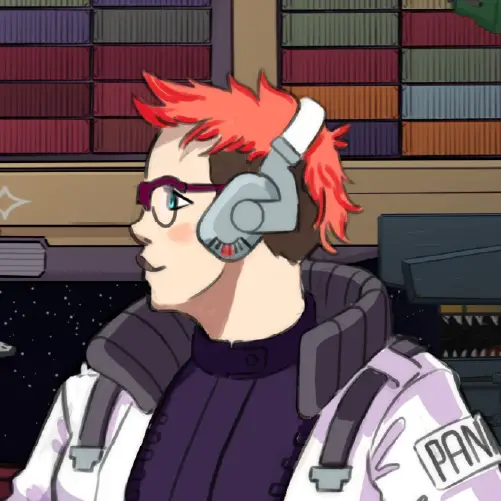

As the series finale is just over the horizon, I got to chat with the cast of Unbalanced Encounter’s The Misfortunate 4 to reflect on their fantasy “wet western.” Gamemaster Patrick Perini and players Craig Pate, Emily Greymoore, Cinderblocksally, and Caustic Phoenix talk about Kevin the moose, layered world-building, and resurrectionists. If you haven’t started listening yet, you can read our review of the first episode.
Panda: It’s been some time since the recording concluded. Do you reflect on the storytelling, even maybe think about other ways it could have turned out?
Cinderblocksally: There were a lot of threads that we only started to pull at that we didn’t really get to finish, just because it was so much shorter. We got to play around with some implications of potential connections and character pasts or similar shared influences that were really only ever hinted at, just because we didn’t have time. The first show (Rally) that we did together was, I don’t know, 60 or 80 episodes. This one was 10. Inevitably, as people that wanna roleplay together and like building stories together, you start finding more nuance and things that you kind of didn’t expect, or connections that you didn’t expect.
Emily Greymoore: I do daydream of scenes that I wish I had retaken because I forget I have the ability to do that in a pre-recorded medium. There are some scenes I think I could have done better, and I think that I could have just said in the moment. ‘Actually, wait, I’m not in the right Vibe or the right energy. Let me just redo this scene.’ I mean, listen, the perfectionist artist in me lives in that space all the time, that’s what I need to do better at that.
Patrick Perini: Did five-time nominated best D&D player Emily Greymoore just say I need to do better?
Caustic Phoenix: I think I’m the same way, especially immediately post-episode, where I go. Damn it. Why didn’t I? And then you fill in the blank, but I think once we finished it and I was a week out, it’s kind of like a traumatic experience where your brain just buries all of that.
Craig Pate: You forget the pain.
Caustic: Yeah, all the trauma, the crying, the intensity. And you think, “Let’s do this again.” And then I’ve signed up for another show.
Carig: I think, for me, it’s a lot of that one because we’ll be listening to the recording later on, and I think, “Wow, Craig, that was a great line. Yeah, I remember saying that…” I’m proud of myself in the moments I go, “hey, can I do that again,” or “I wasn’t feeling that — I don’t feel like that moment that character was doing something like that, or try something else.” Benefits of recording compared to live.
Patrick: I think part of the reason why we do this, and we don’t do scripted audio drama because you’re all phenomenal actors, and you could do scripted audio drama, and in many cases, do. The reason why we do this and not that is because of the improvisation. The emergent thing is the value, and I think our audience, what they sign up for, is when you guys hit a banger line, but also the audience is on board for that emerging Serendipity.
Panda: What led to the creation of characters who clearly won’t get along?
Patrick: They fucking hate each other.
Caustic: I think that’s interesting because I don’t think we had any characters that were buddy-buddy. No, “oh, we love each other.” It was, “we’re working through this because we’re employees,” and then there were moments of, I see you.
Emily: I just really enjoy flipping tropes on their head so much. I think every table deals with at some point, “why would my character get along with your character,” or “we have to figure out a way that our characters would work together.” Being able to do an interesting story and actually kind of work towards a goal asymmetrically, I think, is just really interesting storytelling. It just shows that each of these characters has different motives, dreams, needs, and wants, but can still, despite their flaws, help each other… begrudgingly sometimes.
Caustic: There are your friends, and then your coworker friends.
Patrick: To bounce off Emily’s point. We think a lot about triangulation, too. Audiences who come in with very low context, especially in an actual play where it’s highly improvised, form their ideas about the thing by triangulating contrast points that you pick. How do you pick three different things that encircle the idea that you’re talking about? When you pick an adventuring party that is all harmonious from the drop, there’s no tension, and there’s no asymmetry. You boil them down to a single homogeneous note that doesn’t allow for individual triangulation of the characters.
Cinder: I feel like it’s very easy for it to become boring and melodramatic very quickly. It’s a lot of people, dramatically caring about each other; it’s very hard to make that feel earned. I think having that conflict as a base just makes it so there’s so much room for earnest growth that doesn’t feel that cheesy — it’s just fun. It’s fun to be argumentative with people that you trust and you like. It’s really fun to play characters that are opposed in some ways, but have to work towards the same goal.
Patrick: It gives the audience something, some contrast to chew on when they’re trying to figure out who these people are. We get to understand Craig’s character Odion as a boss to Cal, as a brother to Flo, and as a friend to Weevil. That means we get a rounded picture of who Odion is.
Panda: Emily and Craig, you shared a father. What made you decide to build that kind of relationship?
Emily: It was very inspired by Avatar the Last Airbender and the sort of Zuko and Azula kind of relationship, where it’s Daddy’s little princess versus the one who’s trying to get approval and can never seem to get it. Flo’s character is mixed with a sort of Emperor’s New Groove, get the fuck out of this Palace, and prove yourself kind of attitude.
Panda: If you had the opportunity to play an NPC and take them on their own adventure, who would you play?
Emily: When you hear about the resurrectionists, I think they’re such a cool idea. Spoilers, similar to real-life grave-digging, stealing the bodies, giving them to the universities and the surgeons to experiment on, in this world, they’re the ones who go down into the dungeon, pull out the bodies, and revive them. It’s the people who empty out the dungeon of all those silly adventurers who didn’t quite make it.
Cinder: There was an NPC that was very briefly in the story. They were actually a friend of my character. They were a skeletal elk person — I was really fascinated by them. I’m kind of curious what they get up to. I’m drawn to characters that don’t look like regular people.
Caustic: I will be Kevin the moose. No speaking lines, right? Sounds, yes. I say this kind of jokingly, because Kevin is an asshole, but also right when you were a service animal. You’re privy to a lot of how people act and talk and how they treat their animals. I think there’s a lot to say about why Kevin is an asshole.
Craig: I want to be the gym teacher of just dealing with a child who’s been told you are the future of your family. “I need you to jump over this wire. I’m gonna shoot some flamethrowers off, good luck.”
Panda: What part of the setting sticks with you?
Emily: I love the train. I take full pride and credit in the Dragon Heart train and the monster bit system magic system that came from that. Just the aesthetic of this archipelago, with a railway network between them. Like that Spirited Away train on the water.
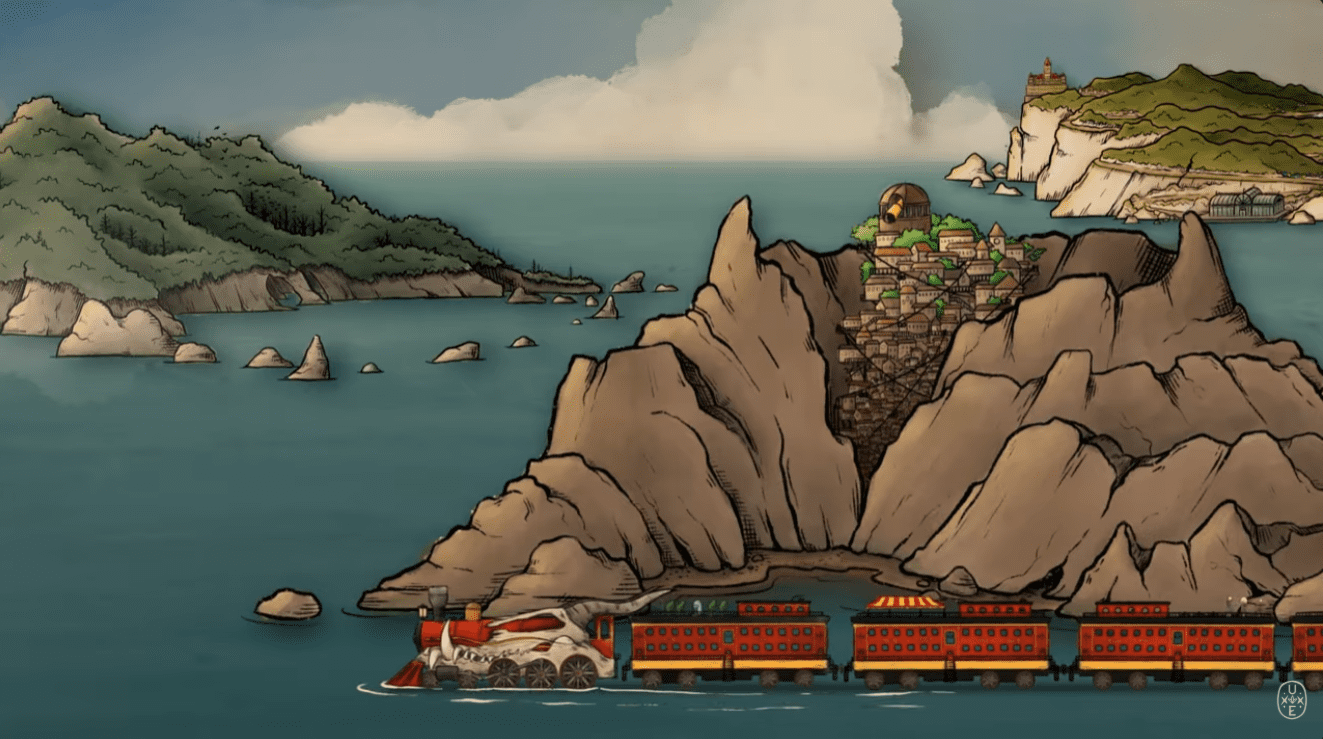
Patrick: I think it’s quick and easy to overlook the weird monsters of the bizarre that are indicative of a broader world that we have just not gotten to yet. These sorts of sorts of larger than life, almost Yokai. Monsters are in this world in a huge way. There’s an overwhelming amount of pluralism around that.
Craig: I enjoyed mainly the church. The church was a lot of fun — people thinking, “Oh, adventuring is profitable, I’m going to send my children to school to risk their lives to make that profit.”
Caustic: There were so many micro ecosystems within it. There’s this town inside all of that, and it just feels so layered. A physical hierarchy that we see in the social class as well. John Johnson was a tourist in many ways in a space that was supposed to be his. But the locals know otherwise.
Cinder: I would like to know more about the life of the city where the story takes place. We did a lot of world-building around the location, but we ended up spending not that much time in it. It felt very good to do ’cause it really helped ground the characters and give us a good, solid understanding of who we were in the world, and also the way we might perceive each other based on where other people sat in the structure of the society of this city. It was such a fun setting, this weird combination of fantasy and the wild west, but muddy and like swampy. I would’ve loved to have had the opportunity to spend. More time exploring the city and the locale around it — this sort of grimy fantasy wild West world.
Panda: How much of the worldbuilding did you, as players, have a hand in?
Caustic: (Sarcastically) Patrick did everything, and we weren’t allowed; we might as well have been characters chained up in the back.
(Sincerely) We had so much control over the number of times I came up with ideas, and you said, ” Yes.” I don’t think you’ve ever said, no.
Patrick: I try not to.
Emily: We did a lot of collective worldbuilding. I remember when we were first together, determined, like the mud in this location, it was a co-creation every step of the way.
Patrick: I think a lot of that comes from being willing to have conversations with your players up front. I’ve built this Spire City where the rich people live at the top, and probably the poor people live at the bottom, and we’ve decided that it rains all the time. I remember having conversations about the mud, and Caustic comes to me and says, “Hey, I want to play somebody who’s from a poor area.” Okay, now, you tell me what that place looks like. What are we dealing with? The more of that you can turn over to your players, the better the world and the more resilient the world is ultimately gonna feel. Your job as a GM is not to design everything. Your job as the GM is to be this sort of interstitial glue between all of the ideas. It’s saying, yes, but. Yes, but it may be slightly different than what you think.
Images from Unbalanced Encounters.
Have strong thoughts about this piece you need to share? Or maybe there’s something else on your mind you’re wanting to talk about with fellow Fandomentals? Head on over to our Community server to join in the conversation!