


Every February there’s games that come out and truly push the envelope of what a game actually IS and what it can do. Sometimes that means you’re turning into a horse, sometimes that means you’re fighting with your own player character, and sometimes you’re alternating between erotic roleplay and fighting the horrors of fascism like you do in All’s Fair, a new TTRPG from Dillin Apelyan crowdfunded as part of Backerkit’s Zinetopia and set to be published by indie published moreblueberries. I sat down with Dillin to learn about the game’s origins in Mickey 17, balancing intimacy and horror, and the unique ways game allow us to express our emotions.
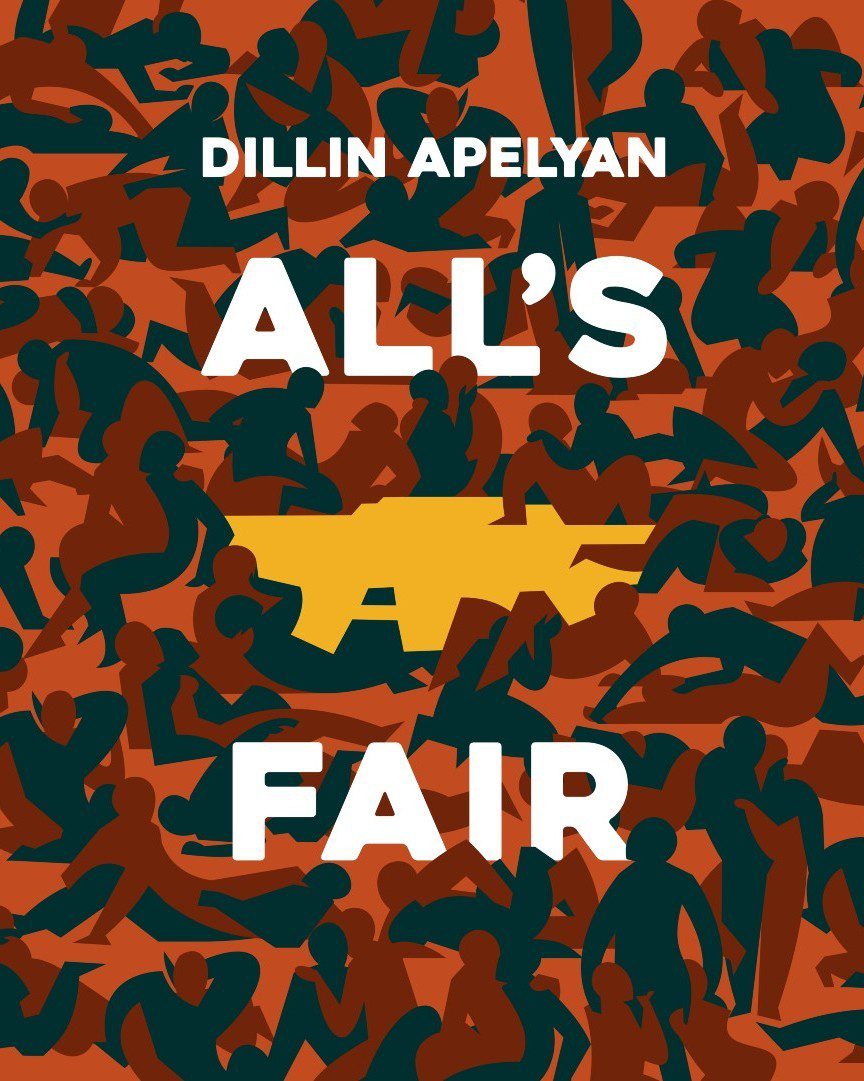
Dan I’m especially curious about where All’s Fair came from. What was the genesis point?
Dillin: So All’s Fair is sort of like a thing that I’ve always wanted to make: a game that incorporated eroticism in some way. But it’s always been a thing where I know those ideas are floating around in my head, but I don’t get the motivation to make a game until something really just lightning strikes me and affects me a lot. Last year, when I saw Mickey 17 in theaters, one thing that really stuck with me and wouldn’t leave even after I left the theater was the way that sex was not shied away from in the movie. The sexual relationship between Nasha and Mickey in this movie is shown pretty explicitly and is a very important part of their romantic relationship. But it’s also directly portrayed as in opposition to things that the fascist regime of this movie are putting into place. So you’re seeing these explicit sex scenes while the fascist leader is giving a speech about who should be having sex and when and why etc.
You have this very rigid, very controlling leadership and they are putting hindrances on what you can do to be intimate with each other. They’re putting controls on same-sex relationships, on interracial relationships. These are all these things that are reminiscent of the real world and the movie takes that and puts this couple at the center of it who are having so much sex and who love it and who are just so into each other in that way. It’s not implied, it’s not hinted at, it’s not winked at, it’s shown.
There was something about this theme of drawing the juxtaposition between the joy, the rapture of sex and intimacy against the horrors of fascism, showing how these two things are in conversation with each other are related and to show them as a rebel against one another. That was the inception point where I initially conceived of this game. I had the base mechanic that I came up with pretty quickly and then I kind of wrote it almost like as a lyric game. I spent the year after that basically writing it into a full playable game that supports itself in the way that I wanted it to. And then once Eliot saw it and wanted to publish it, the pieces all fell into place.
Dan: I saw you had an ashcan on your itch. I’m shocked you didn’t keep the name from that into the the final version.
Dillin: We are looking into seeing if we can justify putting it on the inside cover, because it is my my Chuck Tingle-ass name that I can’t really let go of entirely.
Dan: Intimacy and fascism, it’s a very old and interesting thread. You you see it in 1984. You see it in Brave New World. You see it in The Hunger Games, the different levels of intimacy there and what they mean for resistance. So this is a really cool and still keeping it kind of fun too.
Dan: You’ve done a lot of work with intimacy in your games, with Spin the Bottle and Celestials, I believe.
Dillin: Celestials has a little bit of that. Hunter/ed even is less overt. It’s more implied, but that kind of tension lends itself to there being a either romantic or intimate sexual kind of tension as well. It’s been present for a while. This is just my next escalation in making it overt, the front and center point of it all.
Dan: Tell me a bit about the appeal of smaller games, these intimate two player, one player titles. Some of them are mundane, some are very high concept. What draws you into work on these kinds of ideas?
Dillin: This is just how I see and approach the world. You brought up Spin The Bottle and this is one that illustrates it. When I look at these mundane interactions, these mundane life experiences, like playing spin the bottle as a teenager or in college or whatever, when I think about it, what I really can’t help but think about is the layer happening underneath it. I can’t look at or think about people sitting around the room playing spin the bottle without thinking about the fact that everyone sitting around there already knows who they want to kiss, right? They’ve engaged themselves in this whole social subterfuge where they have sat down hoping that this bottle is going to land on the person they already want it to land on. They don’t want them to know that that’s why they’re sitting there. They want that to just happen and create this magic moment for them that’s going to change things, get them this thing they’ve been vying for.
When I’m looking at games of any kind I’m looking for that layer underneath. You want to save the world, but why? Of course you want to save the world because it’s the right thing to do, but also why? Because you want to be able to experience love. You want to get back to the person that matters. You want retribution for that thing that no one else cares about, but you do. That simple desire feel more interesting and more human and even maybe more flawed. We all have them and it’s such a part of normal life,.And when I’m watching any media, reading something, playing a video game, these are the things I’m thinking about.
I could have walked out of Mickey 17 being like, ooh, hot sex and anti-fascism. I have to find the little threads that needle them together, I can’t stop thinking about them. What helps me to stop obsessing about it is to make something about it.
Dan: I compare a lot of the indie side to the experience I’ve had in the literary scene, the experimental nature of things, the way that people play with tropes and play with form, especially the poetry scene. But when when you have that you have that impulse to explore these things, that impulse to create. What is it about making a game that appeals to you as vector for that exploration as opposed to creating a different kind of media that’s not interactive in some way.
Dillin: I think this speaks to why games are my favorite medium to create in period overall. And that is because you are interacting with it. I’m not in charge of the story. I’m giving you, I’m trying to draw an experience for you. I’m trying to give you a framework to experience something. Everyone that goes inside of that experience is going to color it with their own wants and needs and fears and hopes. And they’re going to come out of it with something that I probably wouldn’t have. And that’s something that is so unique to games because it’s not just a different interpretation of it. It’s a whole different experience.
“Every game that I’ve ever gotten to play has been a gift.”
I feel like I have had these deep emotional experiences, these life-changing experiences playing games. I just feel like the gift that has been given to me by those people and the games that they’ve made, and I want a piece of that. I want to be able to give people that same thing, that same power to create a story that is unique and that maybe they wouldn’t have engaged with if it were a different kind of media and letting them create their own story like that. just think it’s the most beautiful art form.
Dan: Intimacy is something that is sometimes difficult or uncomfortable at traditional RPG tables (other than maybe Vampire) It’s interesting seeing that get leaned into with with other similar games.
Dillin: I think that’s interesting because, yes, it is rare for people to to engage with sexual content in a game intentionally, joyfully, and consensually. But in my early experiences at more traditional tables when I was younger, sexual assault came up all the time. Stuff like that was brought into those games as a plot device constantly. To be in a position where I can take consensual, joyful, ecstatic intimacy and intentionally put it into a game so somebody can then intentionally open up that book and decide to play with it is sort of also like a little bit of a reclamation for me.
Dan: So mechanically it’s based on War and you’re playing as a soldier or the clone. You’re either Nasha or you’re Mickey. And the cards you’re playing give you an intimate prompt. What happens when you get one of them? What does the intimate prompt look like and how does that manifest in the game?
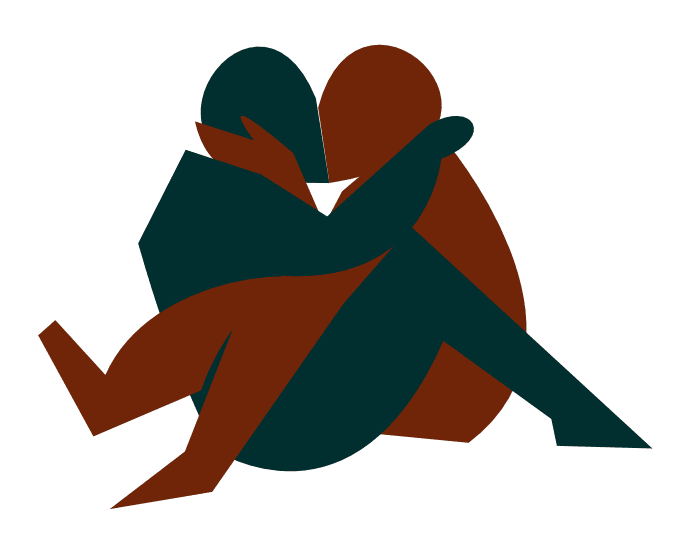
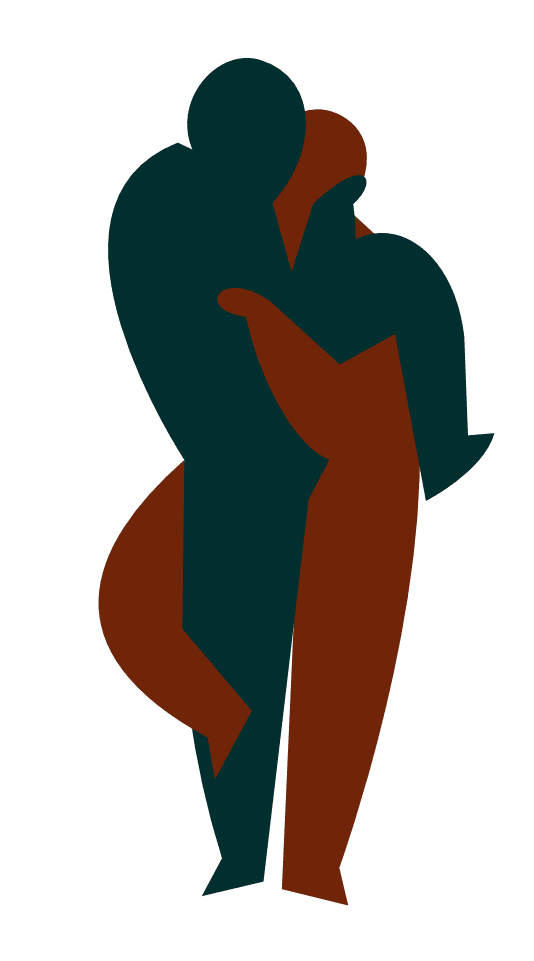
Dillin: So the game goes back and forth between these two phases, right? In War the two of you are turning over cards, whoever has the high card takes that and you keep doing that over and over again until at one point your cards match and that’s a War. In that first bit when you’re drawing cards, taking the high card, et cetera, that’s the intimacy. That’s you two sharing your time together away from the regime, enjoying each other. Every time one of those is pulled, it generates a pair of prompts.
It will start with the person who had the high card. They will get a prompt. And those are erotic prompts like, you know, “How do I keep you quiet” or “Where do I touch you?” That starts things again or sends us into a second round or whatever. And the person with the low card will always have a corresponding prompt back that has them ask the other person something else. There are prompts that are different if the high card was red or black depending. So some of them are asking questions like the ones I just said where it’s asking your partner what is happening with us in the bedroom, whereas the red cards are just prompting you to say something to each other: compliment their body, tell them what you liked about what they did.

Dan: And then what happens when you get to the war? What happens when you hit war and you match?
Dillin: First of all, you are, ideally, supposed to touch each other in some way, whether it’s just that you’re sitting next to each other and you have your arm up against each other holding hands, whatever some kind of contact. Once war happens and you have those those matching cards come up, you are no longer allowed to touch each other until this next part of the game is resolved. And from here on out, you are playing through war.
You’re going to dole out three more face down cards, flip a final card, and then everything that has gotten turned over during this war is going to be painstakingly drawing prompts that are all tragedies that have occurred. It’s going to be people caught in the crossfire, civilians who’ve gotten hurt, people who have compromised their ethics, people who’ve been used by the regime. You’re going to go through these prompts together and sift through the tragedies you’ve witnessed. Face cards during that phase will be escalations of the regime, more restrictions on people’s behavior. And then aces are going to represent new clones of the clone. So the clone has died and is now resurrected in some way as a new version of themselves.
Dan: Kind of a mood killer after all the fun stuff.
Dillin: I was I was really nervous the first time I playtested the game, for a myriad of reasons. But one was that I was hoping that both parts of the game would be as impactful as I wanted them to be. What winds up happening is that I will say I am very comfortable talking about engaging with sexual roleplay. That’s not an issue for me, but it’s not something I do very often. So even for myself, I found that it takes a few prompts before you start to really get comfortable and get into it and get excited. And then all of a sudden, as soon as you feel like you’re excited and turned on…you’re ripped away. And now you have to talk about death and horror and compromise and all of these terrible things that evoke all of these very real world emotions and escalations. So by the time you’re done with that, you kind of can’t wait to start going back to this again.
What is very important about it is that these escalations, face cards and war, they never get shuffled back into the deck. They get laid out face up in front of you so that even when you now go back to bed, you can always see them and you see them pile up.
There are three different ways that the game can come to an end. One of them is that every face card has been drawn out and at that point it is just too much to bear and you have to then take action and instead of just running back into each other’s arms, you have to deal with this. Another is that one of you runs out of cards, that is also you just losing your ability to take this anymore. And then a very special one when, in Mickey 17 style, a Joker comes up an anomaly happens where a new clone has been made without the previous one dying and that changes the game. Now there’s three of you present in this game. And once that happens, if the second Joker gets pulled, one of those clones dies permanently. They won’t be recloned, they are just gone. And if that is to happen, then the soldier will enact revenge and trigger the end of the game.
“How much of this can you tolerate before you have to do something drastic?”
You can keep up with All’s Fair on Backerkit and follow Dillin on Bluesky or their itch.
Images via moreblueberries and Dillin Apelyan
Have strong thoughts about this piece you need to share? Or maybe there’s something else on your mind you’re wanting to talk about with fellow Fandomentals? Head on over to our Community server to join in the conversation!