


A bathhouse, a Starbucks-esque coffee shop, a convenience store, even a film company. Aside from that one snuff film company in 2004’s Vampire the Masquerade: Bloodlines and the *ahem* film studios in Chatsworth, California casting a shadow on that last one, none of these occupations sound particularly harrowing. Of course the primary horror players have to deal with in games from Japanese indie dev Chilla’s Art are the typical staples of the genre: ghosts, curses, evil gods. However in titles like The Bathhouse, The Closing Shift, and The Convenience Store, there’s an added layer to the terrors you experience: the idea that your situation is ultimately inescapable because the capitalist society you live in demands you work there. And what’s scarier than being trapped in a bad situation?
In Chilla’s Art Games, the Nature of Work is Harmful
The premise of The Bathhouse sounds like the exact type of scam any parent would want their fresh-out-of-high-school 18-year-old to avoid. The main character, Akimura Maina, gets an offer to come work at a bathhouse in the countryside in exchange for living in the apartment across the street from it for free. The landlord, just called The Landlord, is a middle-aged man who is also your boss. As soon as you approach your apartment unit, he’s standing across the balcony ready to greet you. Somehow, he knows you’re about to turn 24 years old and for some reason he couldn’t be bothered to clean your new place despite telling you it was clean.
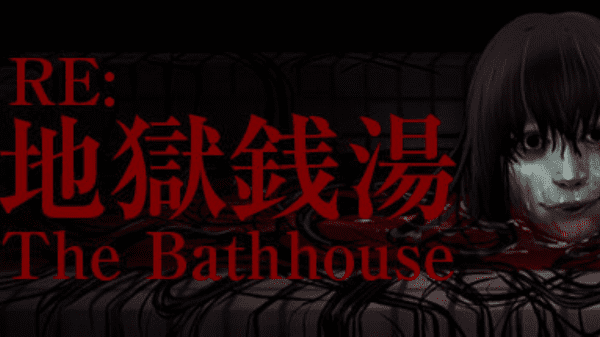
The room is littered with trash, a pile of someone else’s mail, and no furnishing. There’s also mold in your kitchen and a hole in the wall through which you can easily see the outside…so the reverse is likely true as well. The bathhouse you work at is apparently in better condition but the Landlord comments that just being there makes him sick. You of course can’t press him for answers even though his explanation for why he said that is weak. After all, he’s your boss and your landlord. He teaches you the ropes of your job including what to provide customers, how to clean the place, and how to maintain bath temperatures in the boiler room. He also instructs you to read over the rules on the wall and kick out visitors who don’t abide.
These rules include the policies you would usually expect to see in public facing spaces: no customers who are drunk, no running, no photography. You start to realize what policies the rule board is lacking by about your fifth customer. He’s a young man named Rei who asks you where you live, guesses that it’s probably somewhere nearby, and suggests he come visit you sometime. Another man comments on your body, telling you that you should lose weight, that all women should know how to cook, and that he wants you to be his woman. While you have to kick out a woman with tattoos and one in a bathing suit for breaking the rules, there is nothing you can say to either of these particular men. You don’t get to make them leave the bathhouse.
When the owner’s friend, a heavily tattooed man named Keiichi who is apparently a yakuza member, arrives at the bathhouse, you are instructed by the Landlord to allow him through. Keiichi demands that you wash his back, despite this categorically not being in your job description, and when you refuse, he threatens you. You are left with not much choice then but to do what he asks. Another man comes in, pays you, doesn’t ask for anything and doesn’t use the baths. He simply watches you in silence while you carry on with your job.
If you make any mistakes, your boss will let you know about it the next day. And when you find a dead body on the floor surrounded by cheering baboons and try to tell the Landlord, he insists the young man was probably just drunk and that there are a lot of monkeys in the area because the town is rural. You can’t question him on this either, you just have to get back to work. Even outright telling the man the place is haunted doesn’t help you.
Although he does have ulterior motives in this specific case, this is still a surprisingly easy situation to fall into. The protagonist has no familial connections to fall back on for financial support and she’s living and working somewhere she doesn’t know anyone. If she quits, she’ll have to move out of her home, but where would she go? She is stated to have come out to the country to work here because she was unhappy with her previous job and her previous life. Maina is also an orphan who apparently has no safety net to rely on if this job doesn’t work out.
Besides the harassment and strange occurrences though, the job itself is miserable. Customers routinely demean and berate you. You’re too young to work there, you’re too slow at your job, you’re too delicate looking, they don’t like your face. All of four people of the many customers you interact with are polite to you and two of them need to be kicked out for not following the rules.
You’re not given the option to stand up for yourself or to argue with customers. Which makes sense, because in a job like this, you wouldn’t be allowed to. I remember working at a pharmacy and having the store manager chastise me for walking away from a customer for being rude to me. He told me I was never allowed to react to what they said to me. Another manager scolded me when a customer told him she didn’t like a face I made. I had another supervisor blame me when I complained to her that a customer had told me I was incompetent while checking her out at a cash register, with me having to silently continue her transaction. Another customer told me I was “f**king useless”, and again I had to simply work through the beratement, mouth shut. When working another job at a supermarket, I was given a “talking to” by an assistant manager because a customer didn’t like my tone when I sincerely and without irony told her “It’s fine” after she spilled a bottle of juice on the floor.
But I was still in college at the time and couldn’t find better work. I had to continue to come in, day after day, to jobs I hated because I had to pay my rent. It didn’t matter if a man stuck a dildo on a bathroom wall to masturbate with in that pharmacy, we all had to continue on with our work. And just like when one of the customers in The Bathhouse fully gives birth and leaves blood all over the floor while another dyes her hair and leaves the blood-red dye stains behind, someone on staff has to take care of the cleanup and there aren’t really consequences for these people.
Sometimes Your Boss is the Threat
The Bathhouse also demonstrates that sometimes, it can be your boss, rather than any customers, who are out to harm you.
At that pharmacy, one of my coworkers confided in me that our store manager had repeatedly hit on her. He regularly asked her out and one time when, in a moment of anger towards something he said, she told him he was a dick, he responded that she loves dick in her. This was the man who decided our pay and set our schedules and chose who got promoted to what positions.
My coworker never directly reported the harassment to any of the higher-ups, but she did tell other coworkers about it. From there, her accusations worked their way up to the ears of the district manager, who forced my coworker to explain her experience to an investigator for the company. She hadn’t wanted to, but the man insisted she did or they would be having “a different” conversation, implying they would fire her. Even when she came forward though, the result was that she got transferred to another store and our manager told us not to contact her. He eventually got promoted to a corporate position and she had to go on medical leave due to severe depression and PTSD, all while raising her son by herself.
This is less extreme than what actually happens in The Bathhouse, of course. In the 2024 remake of the game, the Landlord had developed an obsession with a previous employee. His infatuation led him to extreme jealousy and he eventually locked the girl up in the basement of the bathhouse. He hadn’t realized that she was pregnant and she gives birth to twins right before dying. It’s revealed that Maina was one of those twins who the landlord lured to the bathhouse to sacrifice to the Ubume, the ghost of the woman he had imprisoned, to lift her curse on him. Even in the original game released in 2022, the Landlord is a malevolent force who means you harm while demanding you put up with whiny, entitled customers.
While the average customer service job doesn’t have ghosts and curses and bosses trying to kill you, the game makes the player feel believably trapped in their situation. The system Maina exists in compels her to at least try to make things work at her job, until things get to a homicidal level of hostile, no matter how utterly miserable her work is. It never is as easy as just quitting and moving away for her.
Or Sometimes the Danger is in Apathy
Sometimes management isn’t actively trying to hurt you. Sometimes the harm they cause stems from a lack of action.
The Closing Shift is one of the more realistic Chilla’s Art games, because there is no ghost haunting your place of work, nor a curse to contend with. You simply have a man obsessed with the player character, having convinced himself that they are in love with each other. He stands outside the coffee shop she works at, watching her through the windows at night. Some customers note they had seen him taking photos as well, and you can find those pictures laying around one of the tables in the coffee shop. They are, of course, photos of the main character.
You can’t tell the man to go away because he isn’t blatantly violating any laws, or at the very least, store policies. At one point, you interact with a male customer who is inappropriate towards you and it seems like he could very well be the stalker. There is nothing you can say to him though and nothing you can do to get him out of the coffee shop. You go to your manager and he mocks you, insisting that no one would be interested in stalking you. The police can’t find the stalker and can’t do anything to protect you. You start to have awful nightmares about the coffee shop, associating it with danger. This shows that the character isn’t unaffected by what’s happening to her. Yet she still doesn’t quit her job. Why?
Back at that pharmacy, I recall working the closing shift (hurr hurr) on a Saturday night. Closing time had come and one of my coworkers had turned off the switch for the automatic doors, then pulled on the doors to manually close them. Before she could get them shut, a homeless man approached the doors, slid his hands inside, and pulled them open. My coworker physically tried to resist him, continuing to shut the doors and I went over to help her, but with the both of us being small women against a grown man, we failed. He shoved us both and came into the store, threatening everyone present before leaving on his own.
The pharmacy caught footage of the incident on camera and when we reported it to upper management, they watched the video to see for themselves. We took that opportunity to request (yet again) a security guard for the Saturday closing shift. After all, we had one for each shift during the rest of the week. The store manager refused our request.
It was made clear this store was not a safe place, yet I continued to work there. Why? Because I was still in college, my family was poor, I had no support system to help me financially, and I still had rent to pay. Quitting before I could find another job would have been reckless. But I couldn’t find a job that didn’t involve interacting with the public without having finished school. I was stuck.
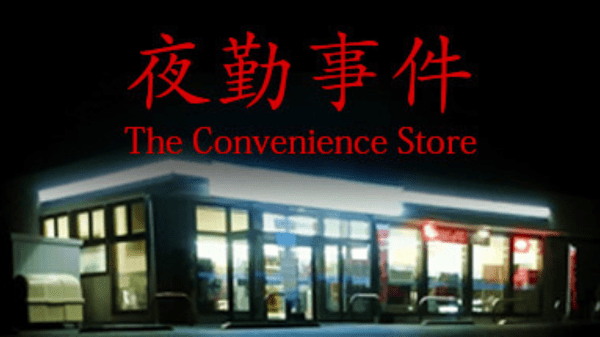
The Convenience Store is less obviously relatable. The danger of working the night shift at a convenience store that stays open late doesn’t come from your boss or any member of the public. It’s just an old-fashioned ghost. But the dread is created by more than just the ghost.
It’s induced when you have to walk through your rundown apartment with a flashlight and travel through a pitch-black town to get to work every day. It’s created by having to go outside to the back of the store, while working by yourself in the middle of the night to handle a rat infestation. It’s exacerbated by the elderly lady yelling at you about what’s been done with Ken-kun, claiming her daughter had lived in the previous building where the convenience store stands now. And by the man outside speaking ominously of what happened there. Even by your coworker Ken Funahashi, who thinks it’s okay to jump out of a locker to scare you when you come into work, right before he gets to leave for the day.
Like The Closing Shift, when the main character confides in her coworker about her strange experiences with hauntings around the store, her concerns are dismissed. Even when she finds the dead body of her manager in the storage shed behind the store, she continues to come into work. Again, why?
Maybe for the same reason Maina continued to work at the bathhouse and The Closing Shift’s protagonist kept coming into the coffee shop. Maybe for the same reason I kept coming into work even after witnessing a customer physically attacking a manager, or when my coworkers and I were held responsible for any accidents at a warehouse we worked at despite being surrounded by clear OSHA violations, or when I was mocked and derided by colleagues for my injuries handling a tomato cutter as a teenager at a fast food restaurant. Bills still needed to get paid and there weren’t better options available at the time.
Playing these games can be an odd experience, because they don’t do much to actually gamify the characters’ jobs. There is no mini-game involved in fulfilling your customers’ orders, no fun ways to make a latte, no special challenges to stock shelves or mop floors. These parts feel less like video games and more like work simulators. You go through these tasks because you have to in order to progress in the game, but none of these activities are fun in and of themselves.
Maybe the games should be critiqued for this, but it feels deliberate. The games don’t dress up your jobs as something aspirational or fun. The work you do is tedious and repetitive, but you have to do it. The characters have to work these jobs if they can’t find anything better.
It wasn’t until after I got my master’s degree and accrued years of freelance experience that I could land better work. But even that “better work” came with abusive managers, backstabbing, harassment, retaliation, and plenty of unethical practices. I’ve even had a coworker at a job I had thought was a good place to work deal with her own stalker coming to the office.
Capitalism Forces Us Into Dangerous Situations
Even if our jobs don’t come with any inherent risk, Chilla’s Art games show that our work can put us in dangerous situations when we otherwise wouldn’t be having such problems. In Jisatsu, you play as an employee at a film company. Your boss has you scout out an abandoned house as a location for a movie set. The house is unsurprisingly haunted, this time by an evil god and one of his homicidal followers who used to live there. Your life is ultimately put in danger, just for coming onto the property and exploring it like you were told to do. Just for doing your job.
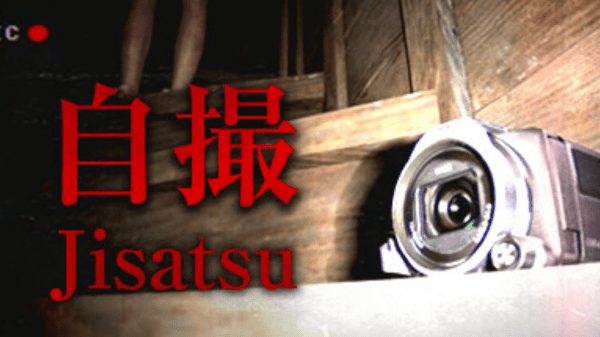
While the danger of the situation can hardly be blamed on the film company, the main character would likely never have gone to that house in the first place if not for his job requiring it. People don’t typically visit derelict houses of their own volition. Even if you don’t believe in ghosts or demons, a decaying, abandoned building would likely be condemned for the physical hazards it presented. Yet the employee put himself in such a dangerous situation because it was part of the job.
Even the ancillary parts of our jobs can and do put us in danger. While I’ve never been haunted by an evil god, I remember having to go to work at 5′ o’clock in the morning in the winter to get to my warehouse job. I had to park on the street where I lived since there was no parking in the building and park on the street where I worked since there was also no parking. This meant I had to leave the house by 4:30 in the morning and walk by myself to my car, parked on the street. One day I had forgotten to lock my car and as I was getting into the vehicle to drive to work, I sat down to see a homeless man sitting in the passenger’s seat next to me.
Thankfully, nothing serious happened. I (frantically) asked him to leave and he did, without arguing or resisting. I discovered later on that he had stolen some of my things, but overall, that situation could have gone a whole lot worse. No one should have to visit dangerous locations by themselves. I shouldn’t have had to be a single woman walking down the street to my car at 4:30 in the morning just to get to work. But the job required it, so I did it.
Monetizing What You Love Will Not Save You
Even the the things we ostensibly do for fun can lead us into destructive situations when we make a living doing them.
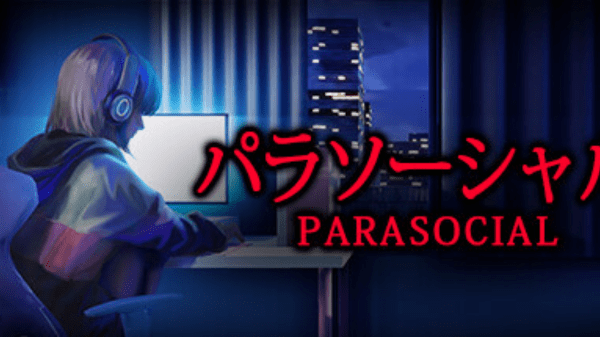
Parasocial stands apart from the previously mentioned entries in that you don’t play as a worker, but rather a streamer named Senra Nina. It’s clear she’s successful in her career as she lives by herself in a luxury apartment with an impressive view. Yet her streaming is what leads her to downloading a game with malware that allows a stalker to hack into her computer. The stalker manipulates her streaming software so her VTuber avatar is removed, exposing her face to the public.
While Nina gets messages telling her that she had better keep on streaming or “bad things will happen,” she seems to mostly continue with it because it’s her work and she’s expected to by her viewers. Even when they make inappropriate comments about her appearance in the chat, she continues playing video games with a cheerful disposition. Even when she thinks someone is in her apartment who shouldn’t be, she is unable to confide in her viewers her stress and how endangered she feels. When she tries to order takeout to her apartment, the deliveryman turns out to be a fan who harasses her instead of delivering her food.
When Nina dreams about the stalker coming into her apartment, her streaming activities seep into her nightmare. Her life is treated like a show made for her viewers’ entertainment. While most people would put a pause on this kind of activity when it is directly linked to being stalked, Nina keeps broadcasting herself playing video games. This continues to the point where she finds herself playing a game sent to her, featuring the player wandering through a building that is a clear replica of Nina’s apartment.
While her stalker turns out to be someone she knew in her personal life, Nina was only exposed to the public and therefore harassed because of her streaming. It started out as something fun for her, but it eventually became the catalyst for her abuse. And she couldn’t just stop doing it, because she had no other job. This was how she made a living.
From streamers to actors to game developers to freelance writers, anybody who does what they love for a living can find themselves burned out by their own passion. Worse though, they can end up enslaved to it even if, sometimes especially if they are successful at it. Arguments for capitalism will insist that people won’t engage in productive activities if they are not incentivized by money. Yet research shows this isn’t the case, and money is in fact not the best motivator.
While people should always get paid for labor performed for others, monetizing hobbies can often have the effect of turning them into jobs. Jobs come with deadlines, quality reviews, notes from managers, complaints from clients, inappropriate comments you have to tolerate, and exposure you don’t want. Tacking these things on to what was a fun activity can turn it into an imposing obligation.
But still our current generation insists on commodifying what we enjoy, squeezing our hobbies like wet washcloths to wring out not just joy from them, but money. It isn’t greed that leads us to feeling like everything we do needs to be monetarily rewarded. The system we exist in has convinced us that we need be be perpetually productive, or we’re being lazy. We’re wasting our time and we’re failing to meet our society’s expectations.
If Maina doesn’t show up to the bathhouse, she’ll get fired and lose her current home. If the protagonists of The Closing Shift and The Convenience Store don’t arrive for their shifts, they’ll get canned as well. So will the employee of the film company if he refuses to scout the abandoned house. Nina will lose subscribers and therefore her source of income if she stops streaming, no matter how it endangers her. No matter how all these situations endanger the people involved.
What is Chilla’s Art Advocating?
Chilla’s Art games don’t offer any kind of solution to the problems they explore or any counter argument. Still, being yelled at by the fictional customers of The Bathhouse reminds me of something I’ve heard a lot of coworkers say: everyone should be required to work customer service at least once in their lives. Doing so can foster empathy for the people in these positions and maybe encourage more appreciation of them, if their essential worker status doesn’t. Maybe it’s enough to just play a Chilla’s Art work simulator to accomplish this.
Images via Chilla’s Art
Have strong thoughts about this piece you need to share? Or maybe there’s something else on your mind you’re wanting to talk about with fellow Fandomentals? Head on over to our Community server to join in the conversation!