


In early October, we put a spotlight on Ambition, an incredibly metaphysical TTRPG now on Gamefound that mixed together psychology, philosophy, and esoterica to create something that felts truly fresh in the TTRPG space. The game’s creator, Yanni Panagiotopolous, took some time to talk with me and go deeper into his inspirations, process and, yes, ambitions for the game.
Tell me a little bit about how you used Daoism to influence your design of Ambition?
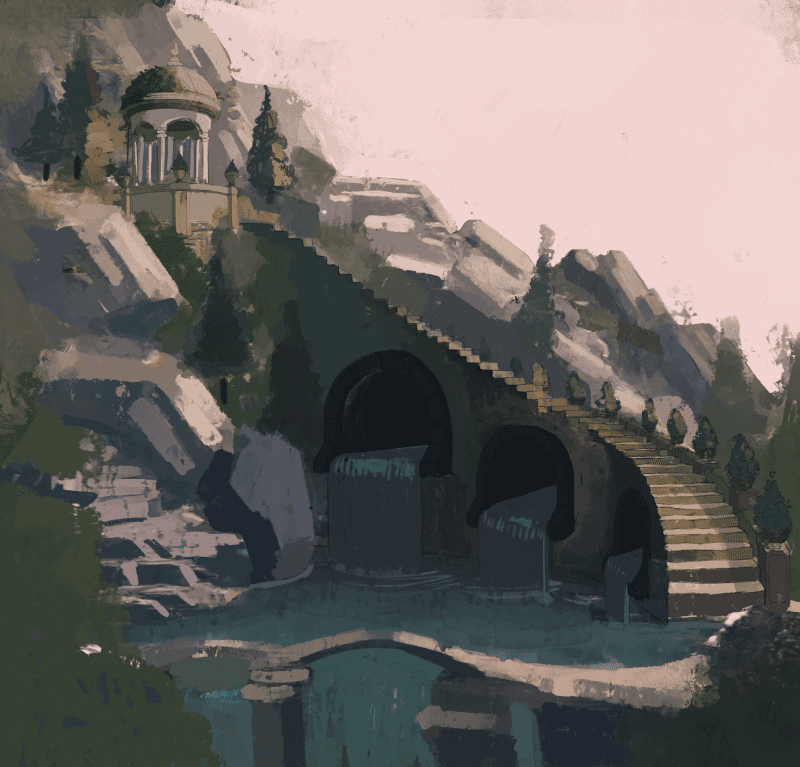
Daoism in the west is understood exclusively as a philosophy but the umbrella of Daoist practice encompasses faith, political systems, shamanism, internal medicine, occultic practices, and more.
This collective Daoist meaning Ambition is very sacred to me, including the Daoist notion that metaphor needs to be interpreted to have meaning and trying to explain its meaning is anathema.
Below are some design “truths” of Ambition. These are fundamental Daoist relationships that are central to how I explore the content of my game, in mechanics, narrative, and storytelling.
The relationship of all things is distinction and non-distinction. That which names is the dictator of which is. That which remains nameless remains infinite.
Context and category paint a picture of the world. Concepts, archetypes, and story place you within that picture. While paintings are pretty, if you seek to understand your place in the world you should look to a mirror instead.
“The three adornments are endearing, but are not enough.” The Nameless spoke to that which is now written as Benevolence. The heavenly philosopher-king bowed, awaiting wisdom. “Exhibit the unadorned, and embrace the uncarved block. Have little thoughts of self and as few desires as possible.” Benevolence nodded, too full of understanding to be open. Without thinking, they desired selflessness and reshaped the thoughts of themself into that of the perfect heavens and ambitious continents.
I know that these are not satisfying answers, Ambition couldn’t be a Daoist game if they were. The mechanics of Ambition are a manual that is meant to be thoroughly understood to play. The metaphor of that play, the Daoist tones, and world surrounding those mechanics are written as something closer to art, asking to be interpreted.
Is that where a lot of the names come from? What does it mean to experiment with the “roles” or player and GM by using terms like River or Ambitious?
Yes! The River specifically as the current of the Way. The Player Book being called The Book of Changes mirrors the I Ching. Its a statement on how mechanics set the bounds of all possible stories within, the narrative physics by which Fate exists under, in the same way the I Ching sets the boundaries of Change through Fate.
Ambition and Ambitious are terms that aren’t Daoist, but instead have a corrosive relationship with the Way. The Metaphor of Play in Ambition revolves around that idea in the same way Ursula K. LeGuin explores the corrosive nature of Benevolence in “The Lathe of Heaven”.
The intent of calling the GM the River is to push the River back into a more subconscious realm than an active set maker. Set making is part of the Rivers responsibilities but the meaningful relationship between the River and the Ambitious is Fate (the River’s current) and Voices (the River’s depth).
The Ambitious are defined what they want and struggle for, what they are striving and reach for. There is never a moment of play in Ambition where that pursuit is absent from your tensions as a character and that plays into Ambitions broader metaphor of wanting something so hard you become the goal as part of the pursuit.
Tell me about your approach to using TTRPG to explore psychology. You were influenced by the way Disco Elysium manages the mind, correct?
Yes! Exceptionally so, Disco Elysium is sublime and I fear that something like it will never be made again. Disco Elysium’s largest influence is the idea that our subconscious world is deeply unknowable. It is something that influences everything we do, its the root of our fixations, our perceptions, and compulsions. It’s always changing and it bubbles up in a way that is different from feelings. Our thoughts can be intrusive, they can require us to sit and contextualize them.
Ambition doesn’t care about aptitude during Tales, it cares about your fixations. It cares about your compulsions, the way your inner world understands the outer world. There are scenarios where every single voice on your character sheet would lead you to push the plot forward if you acted on what the voice said, but which voice you ask discovers something about yourself or the world that you didn’t know, further modulated by whether that voice was silent, focused, or compulsive.
There is an intuitive strangeness when playing character and prodding at an unfamiliar inner world. It resembles the way we prod at our own subconscious while stepping away from this idea that you are always aware of your characters subconscious.
The rules in practice have some very beautiful, gameplay moments that I didn’t expect when I designed them but reinforce the introspective nature of Ambition that is so important to me. During the very emotionally heavy final encounter of The Unknown, I had players use their Voices to ask how to deal with their feelings. How to be strong in the face of grief, how to not be angry at someone who needs kindness, or what these complex emotions the story is pulling from within me are.
How did you craft the magic system?
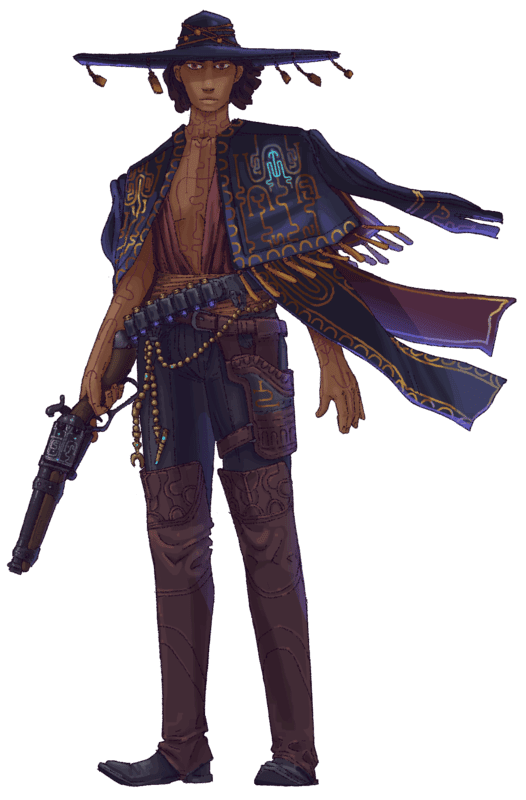
One of Ambition’s design pillars is that power is defined by exception. Swords archetypes break Ambition’s rules of engagements. Bulwarks ignore multi-action penalty through weapon swapping and Deserters wield weapons 2x as large as other archetypes are allowed to. Pentacles archetypes like investigator break the rules of Tribunals or Fate and Cups archetypes break the meta rule of specialization allowing them to use the mechanics of Wands and Swords.
In that framework, Wands archetypes needed to break the spellcasting system. They could not exist as archetypes defined by their spell list. Their means of spellcasting needed to be uniquely exceptional and bespoke to each archetype.
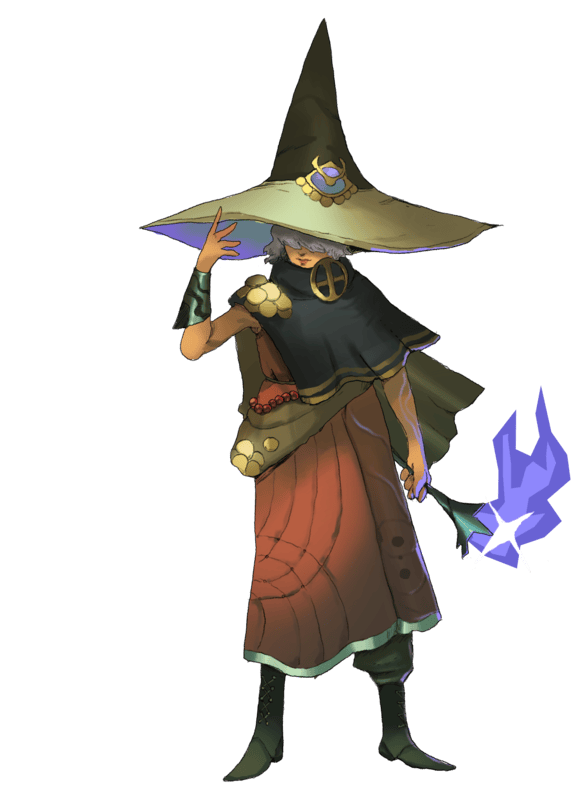
Oracles use a tarot deck as their Arcane Reservoir and Spell List, Papercraft Mages change the nature of their spells with different inks and care about the difference between painting spells Plein Air or during Tales as an Opus. Weavers make custom spells that grow as their elemental fixations are deepened and Witches cast spells using their spite a volatile and painful resource that they share with their familiar.
This is further contrasted by the Cups Archetypes; Perfumer, Untamed, Accursed, and Artificer being forced to engage with the standard version of the spellcasting system above.
Why use tarot as the “mechanical” portion of the storytelling?
Oh this is such a good question! There is a mechanical and narrative reason for this.
Mechanically
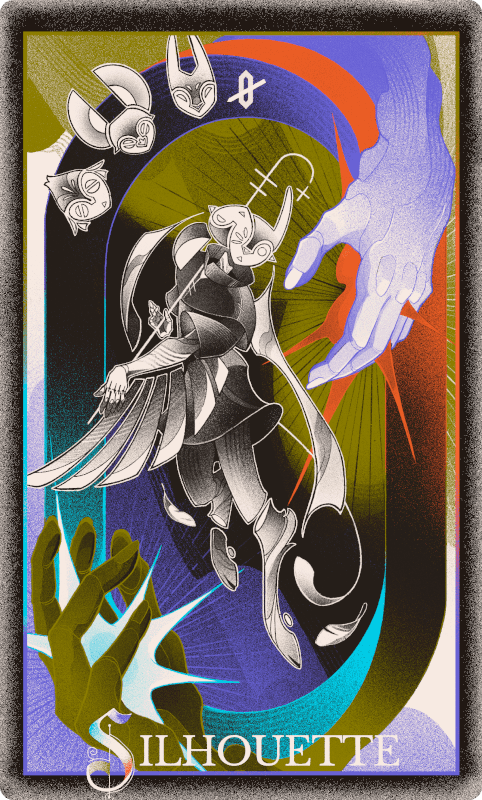
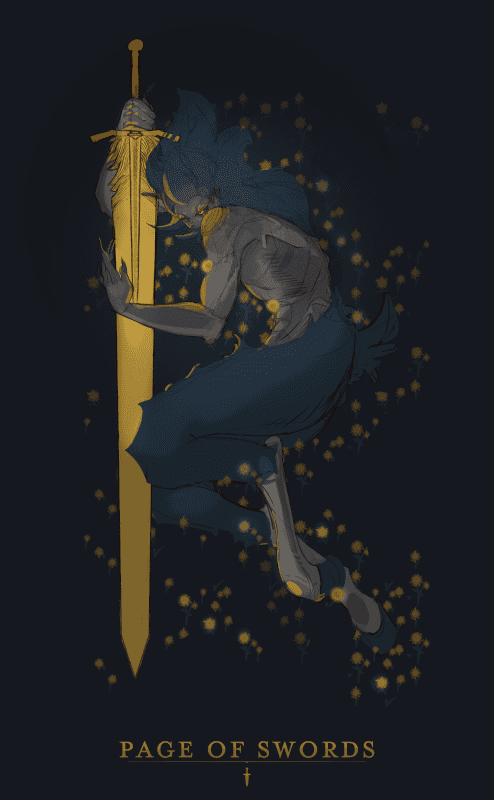
Tarot helped me remove friction from transitioning between modes of play so the rigid boundaries didn’t feel like a burden. When a card is drawn the story is negotiated and expounded on as play transitions from one mode to the next. It creates a real texture at the table, revealing a card builds an anticipation that hides preparation. This is reinforced by the mechanical unity that tarot brings to all the different modes of play. In Tales tarot is Drawn, in Engagements it is Shuffled (for initiative), and in Tribunals it creates a Spread.
Tarot in Tales allows all of the prep to be relegated to divination tables that are curated to the story at hand, so the River can focus on running voices instead of preparing encounters. Voices are the most taxing part of play while running Ambition and all subsystems in Ambition are designed to alleviate that burden as much as possible.
There is also some really really fun math that tarot tables create space for that a d100 doesn’t.
Changing Fate with the Archetype Specific Arcana allows the narrative to spotlight on their rhythm of play. It doesn’t necessarily aid you but it reframes the shape of the story into a rhythm you have the tools to deal with. If you get a chance to check out the Plus One Exp AP of Ambitions playtests you can see just how much changing fate shaped the story in a very meaningful way for the Witch and Investigator.
Narratively
Tarot has an interesting relationship with both the I Ching (Benebell Wen expands on this better than I could) and metaphor of what an “Ambition” is. By holding a contradictory but harmonious meaning and how tarot cards reshape how we contextualize ourselves, defining our complex internal world into an understandable and mappable archetype.
Ambitions downtime mechanics explore positional storytelling through the use of Tarot Spreads, to contextualize the story of characters entwined with your Fate while you were out on a pursuit.
Attaching friends and foes to tarot cards to represent their pressure on the story is really cool. Drawing the Chariot and reuniting with a friend from a previous adventure to fight the encounter attached to that card with them is cool. Drawing the Devil and realizing the Hunter tracked you halfway around the world to resolve unfinished business is cool. It makes every pursuit uniquely influenced by the bonds the players have made as you create a shared story together.
This is a rather, ahem, ambitious undertaking with the length of the books, the art, etc. Did it start that way or did it “grow in the telling?” How has the process been crafting a game of this size?
Ambition has actually stayed almost exactly within scope since its inception, the only two mechanics that weren’t on the original design document was the Perfumer Archetype and Changing Fate.
I had a shape of a game I knew I wanted to make and I knew it would be almost an impossible game to make, which is why I named it Ambition. You really learn how to manage sprints and scope while working in video games. I’m very grateful for that.
Its challenging to build but its manageable. I’m okay with it taking the time it needs to be the system I want it to be, the game is very selfish in that way. I’m making this game because I needed to make it, it is everything I am, and everything that matters to me.
How did you land on the art design and look for Ambition?
Ambition is very design forward. It started as pure design exploration because of my background as a concept artist and from that process there has been lot of art that me and Anna make that will never appear in the final book. We design this way because its important for both of us to understand if the designs we are making work and why they work. Its an absolutely lovely process to share and the most fulfilling artistic endeavor of my life.
For the books black, white, one color style I am very inspired by art that is used as a language and I’ve always felt fantasy lends itself to that style of art as well. My conceptions of fantasy from growing up Greek and my mom reading me books when I was young is much more metaphorical than what Fantasy is in pop culture right now. So when I think of art that “looks” like fantasy I am much more inspired by sigilists and non-representational artists like Helvetica Blanc. It also has the added boon that the internal book style is one that lets me work directly on the page. The graphic nature of the art creates something striking while also being much less time consuming than fully rendered pieces. Which lets me make much more art for the book than I would be able to otherwise.
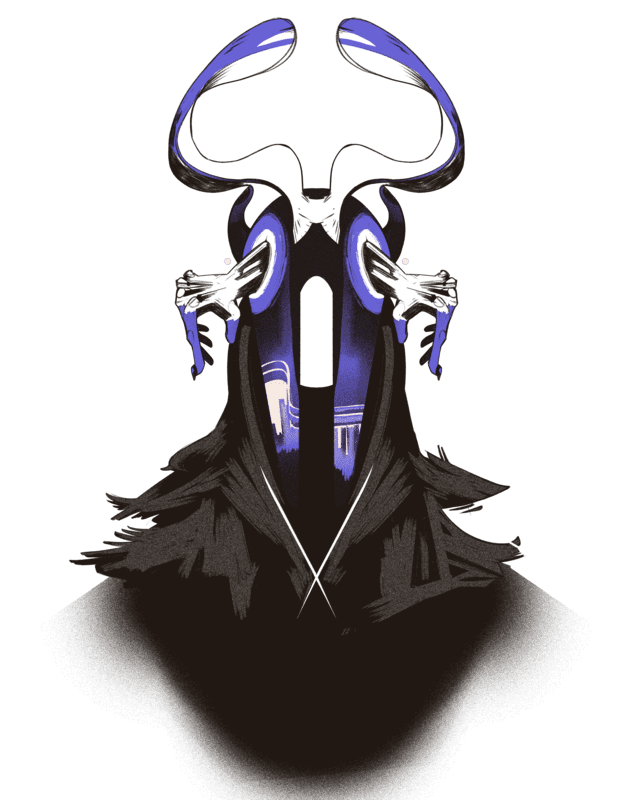
When designing the Witchbook Layouts, I really wanted to zoom out on what it meant to be a Witch in Ambition. Discovering their core emotional touchstones and represent that in illustration. I also want the Archetype splashes to be “faceless”, so that the emotional throughline isn’t associated with a particular “Witch” but instead what it emotionally feels like to be a “Witch”.
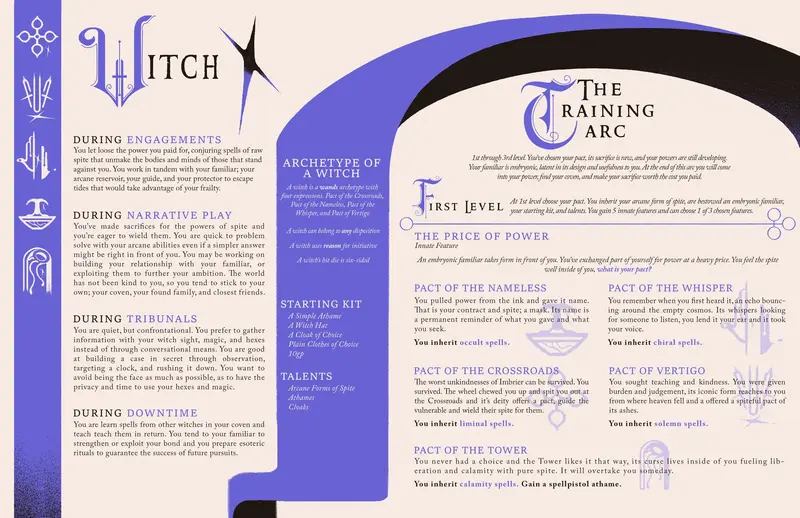
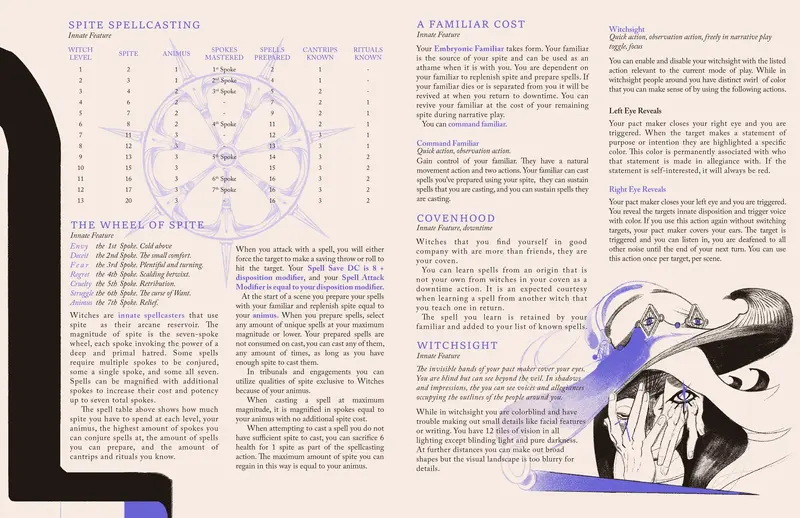
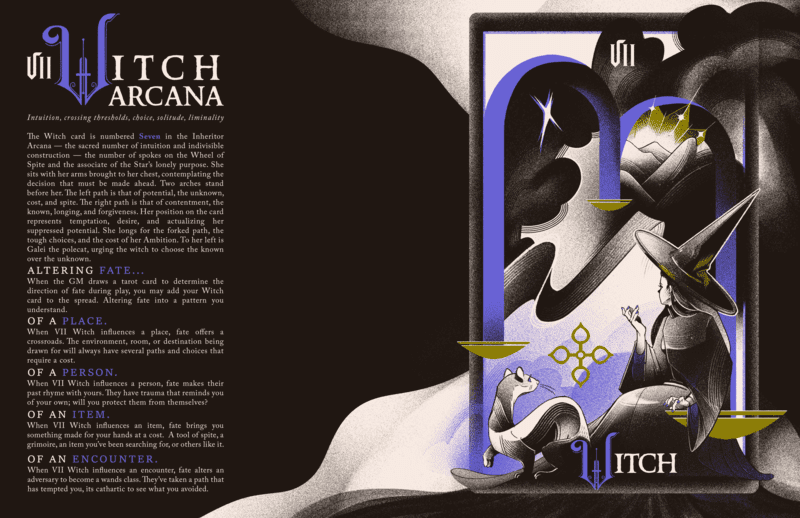
Ambition doesn’t show its rendered aspirational illustrations for Witch’s Archetype Expressions until pg 9, giving the player 8 pages of context to shape their internal idea and story of what a Witch is before showing what others have aspired to become with those same themes.
I also feel similarly about layout. I think layout should be telling a story, it should be something that is reacting to the text and illustrations, its something your illustrations and text should be reacting to.
Artistic Touchstones
Helvetica Blanc is my largest inspiration, a lot of my work is a love letter to how deeply inspiring they are to me as an artist. If you like what I am doing with Ambition you will love what they do just as much. Faith Schaffer is another very important artist to me and you can see their influence on my work as well.
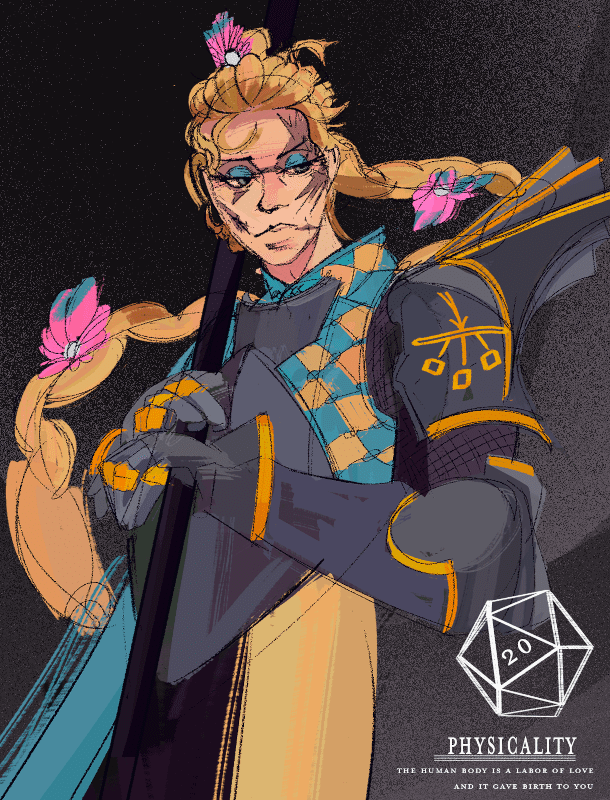
Tom Bloom as a storyteller, designer, and artist is someone I look up to a lot. They are incredibly aspirational, their games are what made me fall in love with TTRPGs.
You can back Ambition on Gamefound and keep up with Yanni’s work on his Bluesky or or The Press Betwixt itch.io.
Images via The Press Betwixt
Have strong thoughts about this piece you need to share? Or maybe there’s something else on your mind you’re wanting to talk about with fellow Fandomentals? Head on over to our Community server to join in the conversation!